

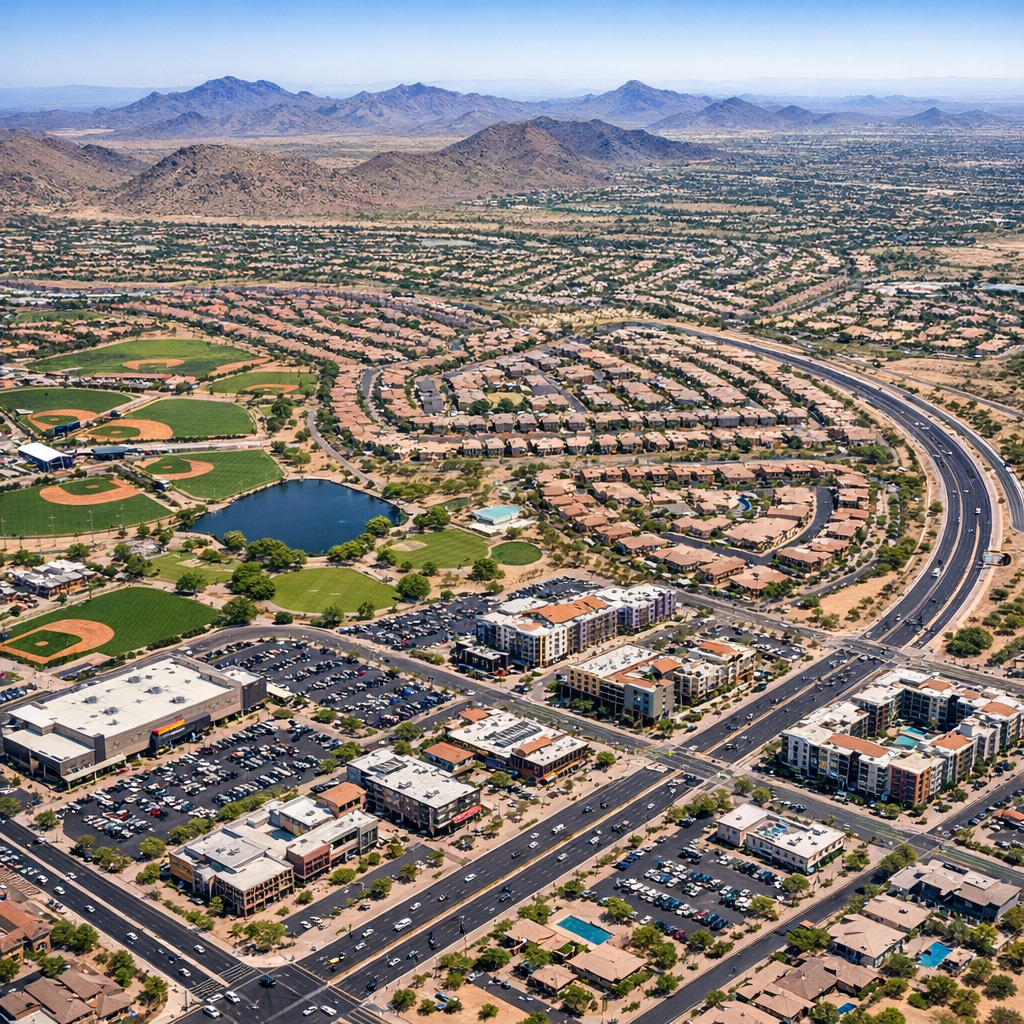
Peoria, Arizona, has experienced significant economic growth in recent years, marked by strategic developments and a burgeoning population. This article explores the key factors contributing to Peoria’s economic landscape and what the future holds for this dynamic city.
Population Growth and Economic Indicators
As of 2026, Peoria’s population is projected to reach approximately 210,350 residents, reflecting a consistent annual growth rate of 3.4%. This steady increase underscores the city’s appeal and the opportunities it offers to both residents and businesses. The median household income stands at $95,815, positioning Peoria as a prosperous community within Arizona. Additionally, the city’s unemployment rate is notably low at 3.1%, indicating a robust job market and economic stability.
Major Developments and Investments
Several significant projects are shaping Peoria’s economic future:
Amkor Technology’s Semiconductor Facility
In a substantial boost to the local economy, Amkor Technology Inc. announced plans to invest $2 billion in a new semiconductor testing and advanced packaging facility in Peoria. This state-of-the-art facility is expected to create approximately 2,000 jobs, enhancing the city’s position in the high-tech manufacturing sector and contributing to the national semiconductor supply chain.
The Trailhead Development
The Trailhead, a major development project located at 83rd Avenue and Happy Valley Road, is set to transform north Peoria. The project includes a lineup of new restaurants and retailers, such as Crust Simply Italian, Jinya Ramen Bar, Einstein Bros. Bagels, and Robeks Fresh Juices and Smoothies. This development aims to stimulate economic growth and provide residents with enhanced amenities, fostering a vibrant community hub.
Downtown Revitalization Efforts
Peoria is actively investing in its downtown area to attract businesses and residents. By focusing on dining and entertainment options, the city aims to create a lively urban center that serves as a focal point for community engagement and economic activity.
Housing Market Trends
The housing market in Peoria reflects the city’s growth and desirability. As of March 2026, the median sale price of a home in Peoria was $540,000, marking a 0.9% increase compared to the previous year. Homes typically sell after 51 days on the market, indicating a healthy demand for residential properties. This trend underscores the city’s appeal to new residents and the ongoing development within the community.
Future Prospects
Looking ahead, Peoria’s strategic investments in infrastructure, business development, and community amenities position the city for continued economic growth. The combination of a skilled workforce, favorable economic indicators, and proactive development initiatives suggests a promising future for Peoria’s business environment.
As Peoria continues to evolve, it remains a compelling destination for businesses and individuals seeking opportunities in a thriving and dynamic community.