

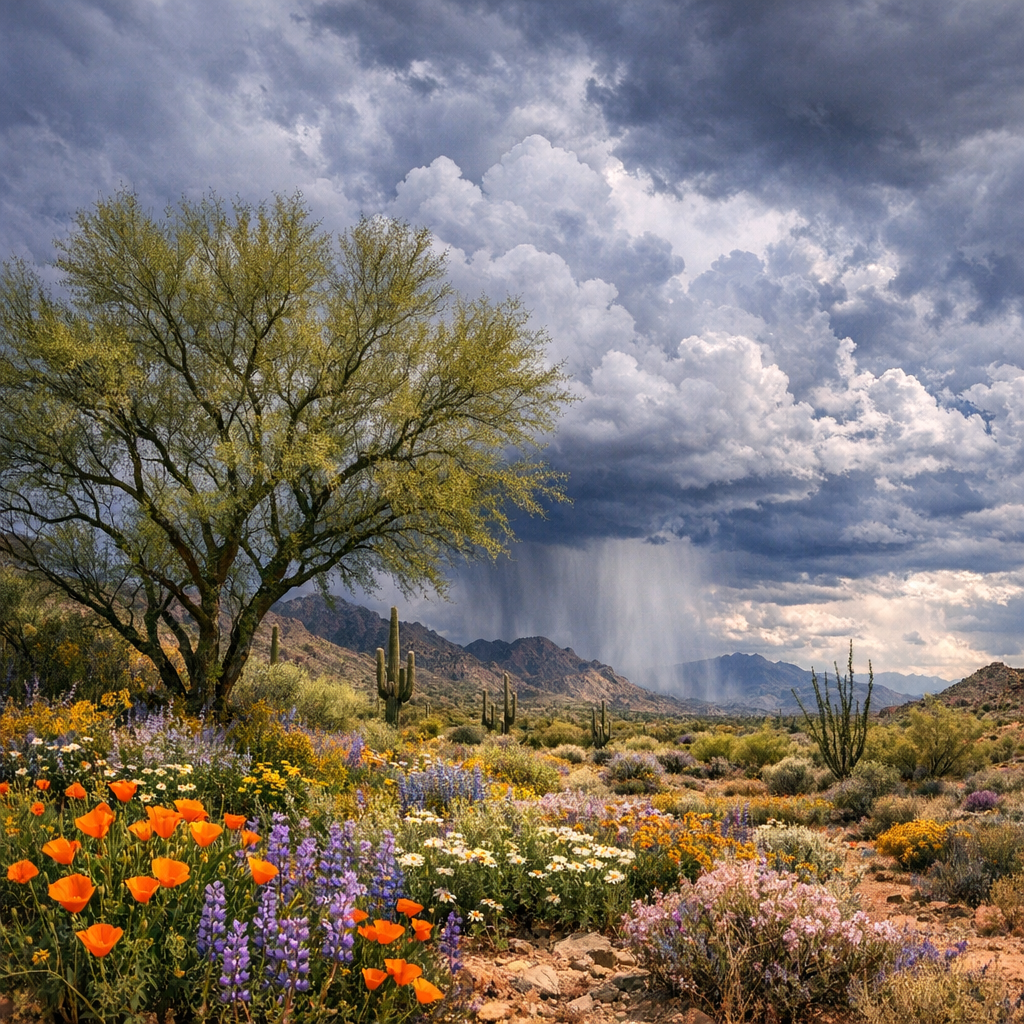
Here in Peoria, nestled within Arizona’s Sonoran Desert, the climate isn’t just backdrop—it shapes when our wildflowers bloom, when monsoon storms strike, and even what species can thrive in these dry, sun-drenched lands.
Seasons That Matter in the Desert
Biseasonal Rainfall Pattern
Unlike many places that get rain mostly in one part of the year, the Sonoran Desert—including Peoria—typically has two rainy seasons. One arrives with winter fronts (December–March), the other with monsoon moisture from July through September. These periods are critical: winter rains support deeply rooted species, while summer storms bring surface moisture that favors shallow-rooted annuals. When either season shifts in timing or strength, the ripple effects are profound.
Dry Heat and Temperature Trends
Before the rains, May and June tend to bake us, with very low humidity and harsh sun. Nighttime lows rise through summer, offering little relief. Then in fall, after monsoons fade, we see warm days and cooler nights—ideal for flowering plants and migrating birds. But winters, though mild compared to many climates, are growing shorter, with fewer nights below freezing and more warm days stretching into spring—trends that scientists say align with regional warming.
Uses in Nature: Flower, Seed, Dormancy Cycles
Spring Flowers and Winter Annuals
If winter rains are generous, low-growing desert annuals—wild poppies, lupines, desert marigolds—blanket the landscape in color from late February through mid-May. It’s a modest bloom compared to lush gardens, but it’s the lifeline for pollinators, insects, and even soil health.
Summer’s Burst after the Monsoon
Once summer storms begin, even drier zones green up almost overnight. Cactus blossoms, summer annuals, and shrubs like palo verde and mesquite may flower again if moisture holds. Most animals respond too: from hummingbirds migrating to bursts of insect life. And while summer can be ugly in terms of storms and dust, it’s also when the desert shows its resilience.
Subtle Signs—Environmental Shifts to Watch
Plant Responses to Climate Stress
Some key native species—palo verde, ocotillo, creosote—are declining under hotter, drier conditions, particularly when rainfall in winter falters. Scientists track changes in plant cover across decades, and some species are seeing reduced abundance or even higher mortality rates in exposed areas. These shifts may reshape the Sonoran landscape long-term.
Freeze-Free Winter on the Rise
One clear trend: winters are getting milder. Freezing nights are less frequent, and those that occur tend to happen only in more severe weather events. For plants accustomed to occasional cold, these changes alter cycles of flowering, dormancy, and survival. Elevation and soil type can buffer some effects, but even on valley floors in Peoria, these patterns are becoming noticeable.
What Residents Can Do—and Look for
- Choose native plants adapted to both dramatic heat and shifting rains—mesquite, palo verde, ironwood. They’re resilient under drought and help stabilize soil.
- Keep eyes open for flowering timing. Local gardeners, hikers, birders—your notes on first blooms and insect activity are valuable data.
- Pay attention to air quality, especially after summer storms or during heat waves—sun and city combine in ways that can affect breathing.
- Support local conservation efforts that preserve washes, skies, and habitat patches where rain runs off—these are critical in capturing moisture and protecting biodiversity.
Living here means being part of a landscape that memorizes every drop of rainfall, every heat pulse, every chilly night. Even changes that seem small—one fewer frost, one less thunderstorm—can matter. And while we can’t stop climate shifts overnight, understanding them helps Peoria stay connected to its desert roots as the future unfolds.