

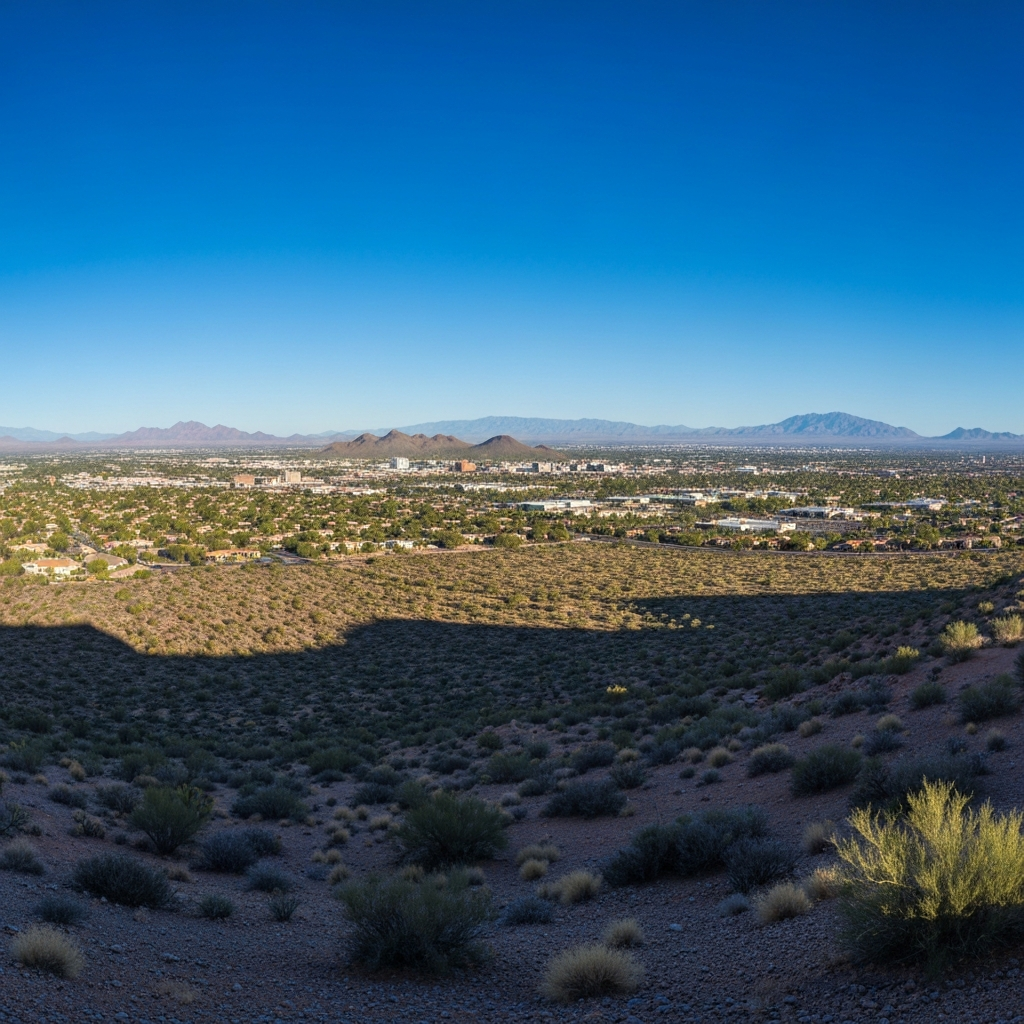
Peoria, Arizona, is characterized by a hot desert climate, classified as BWh under the Köppen climate classification system. This means residents experience high temperatures and low humidity throughout the year.
Temperature and Precipitation
Average high temperatures range from 67.2°F (19.6°C) in January to 106.1°F (41.2°C) in July. Low temperatures vary between 42.5°F (5.8°C) in January and 80.5°F (26.9°C) in July. Annual precipitation is approximately 9.35 inches (237.49 mm), with the wettest months being July and August due to monsoon activity.
Seasonal Variations
Summers are notably hot and dry, with average temperatures exceeding 100°F (38°C). The monsoon season in July and August brings thunderstorms and increased humidity. Winters are mild, with average low temperatures around 45°F (7°C).
Environmental Considerations
Peoria faces environmental challenges such as drought, heat, and flood risks. The Agua Fria watershed, encompassing Peoria, has experienced drought conditions in 85% of weeks since 2000. Additionally, the number of days with temperatures above 110.4°F (43.6°C) is projected to increase significantly by 2050.
Air quality is another concern. A recent report indicates that nearly 1.4 million children in Arizona are at risk from ozone pollution, with the Phoenix metropolitan area, including Peoria, ranking among the worst in the nation for air quality.
Water Quality
Peoria’s tap water meets EPA standards, with all historical violations resolved. Regular monitoring ensures the safety of the water supply for residents.
Understanding these climatic and environmental factors is essential for residents to make informed decisions and adapt to the unique conditions of Peoria.